Talidass GLOF Still Unrecovered as Winter GLOF Warning Issued
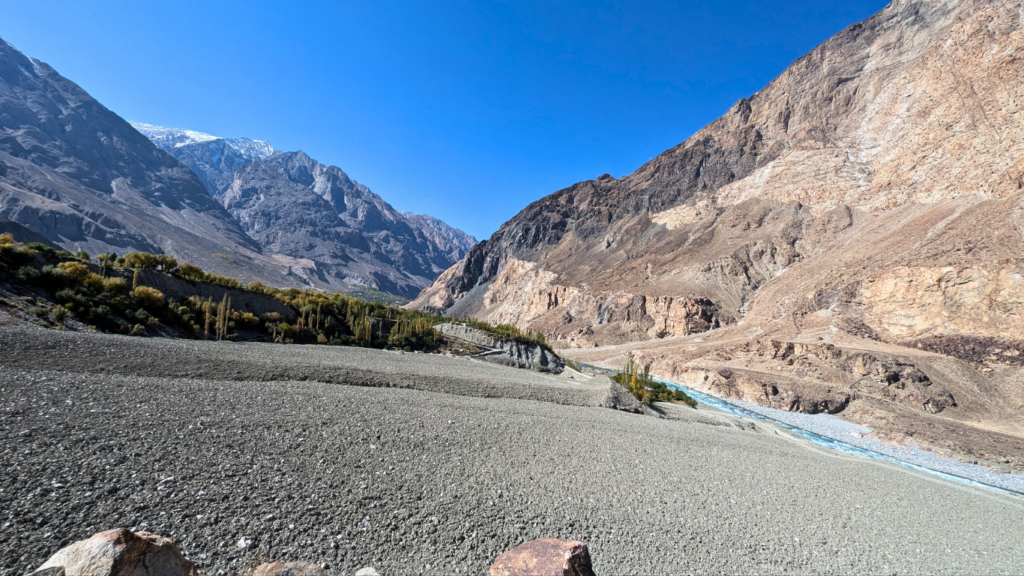
Glacial Lake Outburst Floods (GLOFs) are no longer rare disasters in Gilgit-Baltistan. With rising temperatures, unpredictable snowfall, and accelerating glacier melt, GLOF in Gilgit-Baltistan is becoming a recurring climate emergency.
The year 2025 exposed serious gaps between early warnings, preparedness systems, and ground realities especially after Talidass GLOF, Ghizer GB.
February 2026 Climate Outlook: Why a Winter GLOF Warning Was Alarming
In February 2026, the Pakistan Meteorological Department (PMD) issued an unusual advisory: temperatures in Gilgit-Baltistan were recorded 3–5°C above normal. Record warmth was observed in Gilgit and Bunji.
Traditionally, PMD GLOF warnings are issued during peak summer or extreme heatwaves. However, this time the warning came in late winter.
According to PMD:
- Reduced snowfall
- Persistent abnormal warmth
- Accelerated glacier and snow melt
These conditions increased the risk of moraine-dammed glacial lakes swelling earlier than expected, raising the probability of GLOF events between February and April 2026.
Vulnerable areas highlighted included:
- Gilgit
- Ghizer
- Hunza
- Bunji
- Chilas
- Astore
This advisory clearly linked climate change in Pakistan with shifting glacier behavior, even winter is no longer safe.
GLOF Events vs Early Warning Systems in Gilgit-Baltistan
On August 12, 2025, the National Disaster Management Authority (NDMA), based on forecasts from PMD, issued a broad GLOF alert for Gilgit-Baltistan and KP.
The advisory warned that active monsoon spells could trigger glacier-dam failures. Authorities were directed to:
- Monitor vulnerable glacial lakes
- Conduct evacuation drills
- Alert at-risk communities
However, this was a regional warning, not a site-specific alert. No direct warning was issued for Talidass valley.
Talidass Ghizer Flood 2025: When the Glacier Burst
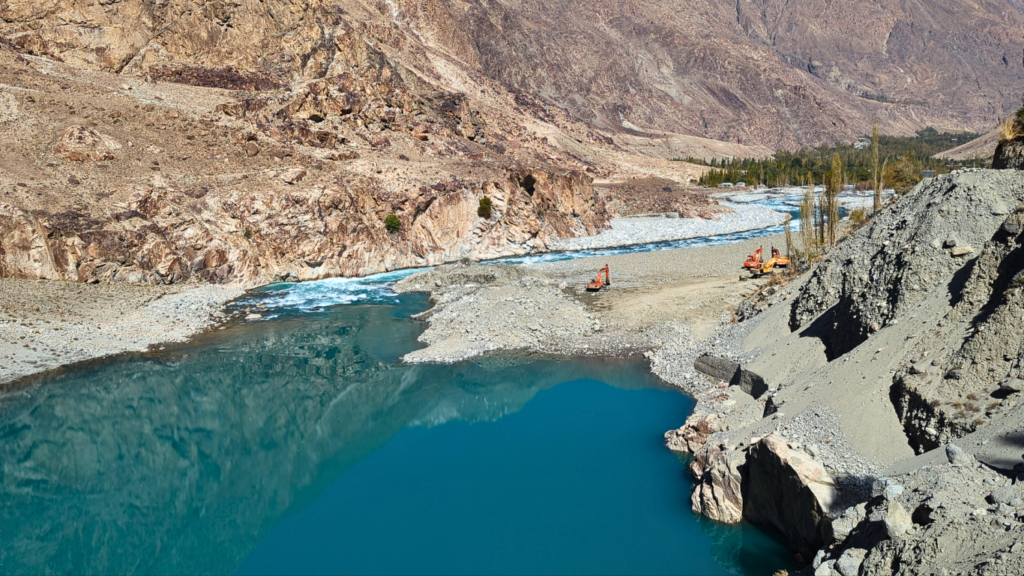
In the early hours of August 22, 2025, around 3:00 AM a massive Glacial Lake Outburst Flood struck Talidass village in Gupis, Ghizer district.
A glacier collapse blocked the Ghizer River with debris, forming a 5–8 km long artificial lake upstream. Within hours, accumulated water surged downstream.
Infrastructure Damage
The Talidass Ghizer flood 2025 caused extensive destruction:
- At least 70 houses were completely destroyed (some reports indicate over 100 damaged)
- Shops and farmland swept away
- Irrigation channels buried under mud
- A school and mosques submerged
- Wooden bridges washed out
- One kilometre of the main Ghizer road destroyed
The artificial lake submerged community assets and isolated entire villages.
This was one of the most destructive examples of glacial flood damage in Gilgit-Baltistan in recent years.
Emergency Response and Evacuation
Despite the scale of destruction, no lives were lost. More than 200 people were evacuated thanks to early warnings from a shepherd, who alerted the villagers in time. There were no formal early warning systems, and rescue teams did not arrive for at least four hours, leaving many people trapped in the flood. Later, they crossed the surge on their own, risking their lives, including children and women, under extreme danger.
Eyewitness Accounts: When Shepherds Became the Warning System
A shepherd noticed the abnormal swelling of the stream and warned villagers minutes before the breach. Word spread quickly. People moved to higher ground.
Local observers later stated that community awareness saved lives, not automated sensors.
This is particularly concerning because the UNDP-backed GLOF-II Project had installed early warning systems in vulnerable valleys.
However, during the Talidass event, these systems reportedly did not provide timely alerts.
This exposes a serious gap between climate adaptation investments and operational readiness.
Talidass GLOF and Prior Warning: What Went Wrong?
There was no specific alert issued for Talidass before the flood.
The August 12 NDMA advisory was general and regional. It did not identify Talidass as a high-risk site.
This raises important questions:
- Are glacial lakes being monitored in real time?
- Are community-based early warning systems fully operational?
- Is last-mile communication reliable?
In climate-vulnerable regions like Gilgit-Baltistan, a general warning is not enough.
Post-Alert Impacts and 2026 Outlook
After the Talidass flood, PMD issued rainfall forecasts for August 23–27, warning of continued flood risks. However, by then the artificial lake had already formed.
The February 2026 temperature advisory represents a shift in climate patterns. If glacier melt accelerates in winter, the GLOF season may expand beyond traditional summer months.
This means disaster preparedness must also become year-round.
Climate Change Stress in Gilgit-Baltistan
Gilgit-Baltistan hosts over 13,000 glaciers, the largest concentration of glaciers outside polar regions.
But the climate equation is changing:
- Winter precipitation below normal
- Rising average temperatures
- Earlier snowmelt
- Formation of unstable glacial lakes
These trends directly increase the probability of GLOF in Gilgit-Baltistan.
Climate change is not a future threat. It is reshaping mountain hydrology today.
Human Costs Beyond Statistics
The Talidass GLOF displaced families overnight.
Homes, livestock, crops, and livelihoods disappeared within hours. Schools closed. Roads cut off access. Economic recovery will take years.
While there were no fatalities, trauma, displacement, and financial losses remain.
Communities in Ghizer, Hunza, and other upstream valleys now live with constant uncertainty. Each heatwave or intense rainfall raises the same fear:
Will the next glacier burst without warning?
The Way Forward: From Alerts to Action
The Talidass flood highlights three urgent needs:
- Strengthening real-time monitoring of high-risk glacial lakes
- Ensuring early warning systems function at the community level
- Integrating local knowledge into formal disaster planning
Community awareness saved lives in Talidass. But communities should not be the only line in emergency situations.
As climate change in Pakistan intensifies, proactive risk reduction, not reactive response must define policy in Gilgit-Baltistan.
Final Reflection
The February 2026 winter GLOF advisory shows that climate patterns are shifting. The Talidass 2025 disaster shows that warning systems still have gaps.
The question is no longer whether GLOFs will occur.
The real question is whether we will be ready next time.
Sources: Field reports and news media provide the details above. Key references include Pakistani press reports, PMD advisories, and local analyses. The cited material draws on official statements and eyewitness accounts to outline the 2025 flood and official flood-risk warnings.