
Why South Asia Faces a Climate Emergency
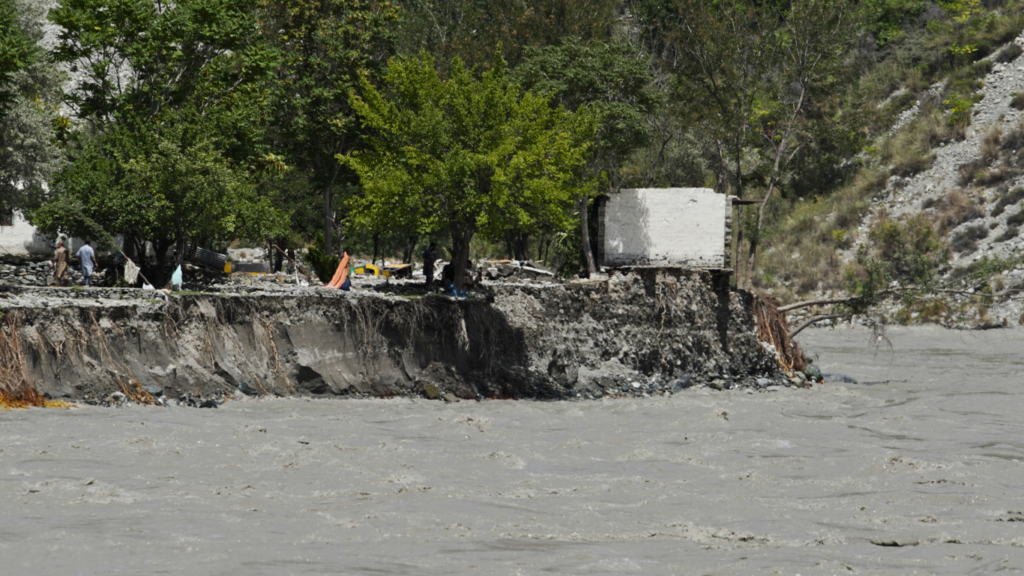
South Asia is home to about 1.8 billion people and is extremely exposed to climate hazards. The region’s densely populated river deltas, mountain ranges and coasts face worsening heatwaves, floods, droughts and storms. More than half of all South Asians (≈750 million people) have endured at least one climate-related disaster in the past decade.
World Bank experts describe a “new climate normal” of intensifying floods, cyclones, droughts and heatwaves that threaten living standards for up to 800 million vulnerable people. South Asia’s combination of poverty, high population density and dependence on climate-sensitive livelihoods makes it one of the world’s most climate-vulnerable regions.
Floods and Glacial Hazards
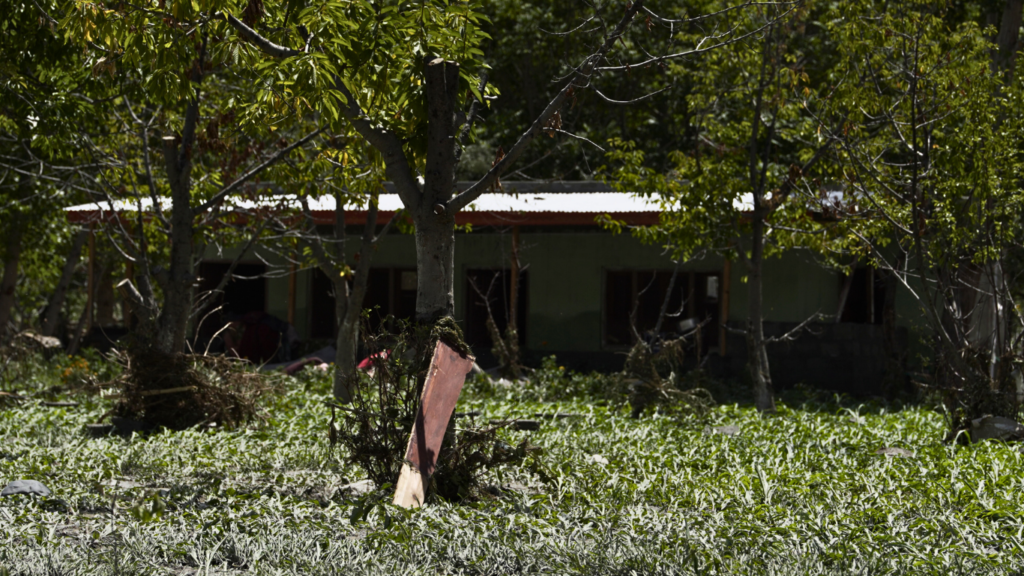
Seasonal monsoon rains and glacial melts increasingly unleash catastrophic floods. In 2022 Pakistan, record monsoon rains caused a “climate-induced humanitarian disaster”: over 30 million people were affected and about 900 killed as vast areas were submerged. Similarly, devastating floods struck India, Nepal, Bangladesh and Afghanistan, each displacing millions and destroying homes. For example, monsoon floods in July 2024 displaced “millions of families” across Afghanistan, Bangladesh, India, Nepal and Pakistan.
These extreme downpours are likely intensified by warming: global reports show climate change has roughly doubled the frequency of floods and disasters in recent decades. At the same time, high-mountain Glacial Lake Outburst Floods (GLOFs) are emerging threats. In the Hindu Kush–Himalaya, melting glaciers form unstable lakes; Reuters notes ~9 million people live near 2,000+ glacial lakes, and recent outburst floods (e.g. northern India 2021) killed over 100 people.
Floods overwhelm communities and infrastructure. Pakistan’s 2022 floods damaged ~3000 km of roads and 130 bridges in three months. In southern Asia’s flood-prone regions, adaptation such as early warning systems and shelters is saving lives: Bangladesh’s cyclone shelters and strengthened embankments have markedly reduced fatalities from severe storms. Governments and communities are now pressing for more flood defenses, resilient urban planning and relief capacity as monsoon extremes become more frequent.
Heatwaves and Extreme Heat
Record heat is striking South Asia more often. In April–May 2023, India, Pakistan and Bangladesh endured historic heatwaves, temperatures soared above 40°C across large areas and caused widespread illness and power outages. Climate scientists found these April 2023 heat extremes were “30 times more likely” due to human-caused warming. Humid heatwaves that used to occur once a century in India and Bangladesh are now expected roughly every five years. Hundreds of people have died, and the health toll may be much higher; experts estimate India’s long-term heat mortality exceeds 24,000 deaths (1992–2022).
South Asian cities are now routinely recording unprecedented highs (e.g. 45°C+ in North India/Pakistan), and children report that heatwaves disrupt schooling, concentration and well-being. Without rapid emission cuts, climate models predict deadly heat will worsen: one study warns that at +2.7°C warming up to 2 billion people could face unbearable “wet bulb” heat.
Drought, Heat and Water Scarcity
South Asia also faces worsening droughts and water stress. In Pakistan’s northern mountains, communities describe the Gilgit-Baltistan region as a “vertical desert” where water is extremely scarce. Climate change magnifies these trends: higher melt-off seasonality and erratic rain increase both drought risk in lowlands and flash floods in hills.
Additionally, India’s recent multi-year droughts are historic: the severe 2015–16 El Niño drought affected ~330 million people (nearly a quarter of India’s population). Prolonged rainfall failures and rising temperatures have turned once-fertile areas barren (e.g. 2017 Tamil Nadu drought, “worst in a century”).
However the Aga Khan Development Network (AKDN) projects illustrate local adaptation. In remote Pakistani valleys, the Aga Khan Rural Support Programme (AKRSP) has mobilized villagers to build over 1,500 mountain irrigation channels, irrigating 209,932 acres and benefiting 120,000 households. These hand-dug channels have improved food security despite arid conditions. AKRSP is now adding solar-pump irrigation schemes and planting 132,000 trees to boost water retention in fragile watersheds. Such community-driven water projects help buffer drought impacts even as glaciers shrink.
Melting Glaciers and Rivers
The Hindu Kush–Karakoram–Himalaya ranges feed Asia’s great rivers, but their glaciers are melting 10 times faster than historical rates. UNICEF reports 750+ million South Asians rely on these glacier-fed basins including Indus, Ganges, and Brahmaputra. Alarmingly, experts warn about 80% of the Hindu Kush Himalayan (HKH) glaciers could vanish if the management measures were not taken timely. That meltwater initially boosts river flows, but long-term loss threatens dry-season water supplies, irrigation and hydropower.
Melting also destabilizes ice and moraine dams, increasing the chance of flash floods and landslides in downstream valleys. Indeed, satellite studies show Himalayan glaciers have lost 11% of coverage (1990–2015) while glacial lake area rose 14%. Already, unprecedented melt events are documented: one “well-studied” glacier in India lost three times its average annual mass in 2022. If warming continues, diminished runoff will hurt crop yields and cause food shortages, especially for children who depend on glacial-fed irrigation.
Economic and Social Impacts
Climate change is hitting economies and societies hard. A UNFCCC summary of an ADB report warned that unchecked climate change could annually shave up to 9% off South Asia’s GDP by 2100. Even by 2050, low-emission scenarios project 1–2% GDP loss per year. Floods, droughts and storms exacerbate poverty: they destroy crops, damage schools and health centers, and force families into debt or migration.
Children bear a heavy burden. UNICEF notes that today’s children already face far greater risks than decades ago, for example, modern flood and heat events expose them to hazards unseen in 1960. Climate shocks interrupt schooling (ruined buildings, unsafe journeys), spread disease (malnutrition, waterborne illness), heighten child protection threats in camps and a long time food insecurity.
Adaptation and Resilience Efforts
South Asian governments and communities are stepping up adaptation. Key strategies include:
- Cyclone/flood defenses: Bangladesh has built thousands of community storm shelters and upgraded embankments, which have significantly reduced storm fatalities. According to reports early warning systems and evacuation plans in coastal India and Bangladesh save lives each year.
- Water security projects: Pakistan’s AKDN programs have helped villagers dig mountain irrigation channels to capture scarce meltwater. Solar-powered lift-irrigation and massive tree-planting also enhance groundwater and soil moisture. In India, farmers are shifting to more drought-tolerant crops and using drip irrigation to stretch water use.
- Urban and infrastructure resilience: Pakistan’s climate conferences (e.g. AKU’s climate-resilient cities forum) emphasize redesigning buildings and systems for heat and flood resistance. Cities like Delhi and Karachi are exploring heat-action plans and green spaces to mitigate urban heat islands.
- Climate finance and planning: The World Bank reports South Asia’s climate finance rose to $3.7 billion by FY2021, split roughly equally between adaptation and mitigation. Still, experts estimate Pakistan alone needs $152 billion by 2030 for adaptation, most of which remains unfunded. International mechanisms (like the COP’s Loss & Damage Fund) aim to help bridge this gap for vulnerable countries.
- Community and youth engagement: NGO and UNICEF-led programs are training students and local leaders in disaster preparedness, and youth delegates from South Asia are lobbying for stronger child-focused climate policy at COP. For instance, Pakistan and provincial leaders signed a COP-pledge to integrate children’s needs into national climate plans.
These efforts show progress, but all experts agree much more urgency is needed. South Asia’s millions of children cannot wait.
Conclusion: Urgency for Action
The accelerating climate extremes in South Asia make adaptation and mitigation urgent regional priorities. Leaders and citizens are gearing up for collaborative action, for example, the upcoming 2nd Breathe Pakistan International Climate Change Conference (Islamabad, April 2026) will bring together experts and stakeholders to tackle exactly these challenges.
As world bodies emphasize (COP, UNICEF, World Bank), South Asia will need massive investments in climate-smart agriculture, resilient infrastructure, social safety nets and clean energy to protect its people. In sum, heatwaves, floods, GLOFs and droughts are increasing across South Asia; the evidence of their human and economic toll is clear.
Now is the moment to turn urgency into action, scaling up proven solutions, from early warning systems and resilient shelters to safe relocation and sustainable water security, so that South Asia’s children inherit a future of safety, dignity, and opportunity, not crisis.
Sources: Reports and data from UNICEF, UNFCCC, World Bank, ADB, AKDN and major news agencies (Reuters, Al Jazeera) were used above. These include regional climate studies and official releases (e.g. UNICEF South Asia, World Bank climate briefs, COP declarations, peer-reviewed and journalistic accounts).