Since agriculture utilizes a significant portion of the Earth’s water, efficient delivery systems are important for sustainable food production. Farmers are increasingly searching for water-saving techniques that preserve crop productivity while conserving resources as climate change impacts moisture availability and rainfall patterns become more unstable. Drip irrigation, a method that applies hydration precisely and under control to the subsurface area, is one of the best alternatives.
These setups deliver moisture/water exactly where plants require it by using specialized piping, discharge nozzles, and localized watering methods. This focused strategy significantly reduces losses from evaporation, runoff, and poor distribution issues frequently observed in conventional flood or spray techniques.
Modern systems utilize distribution lines and precision outlets to supply steady hydration exactly where vegetation needs it. This targeted approach reduces waste commonly seen in traditional methods. As a result, this technology has become a vital tool for improving efficiency, supporting sustainable farming, and helping farmers adapt farmers, adapt to shifting environmental conditions.
What Is Drip Irrigation?
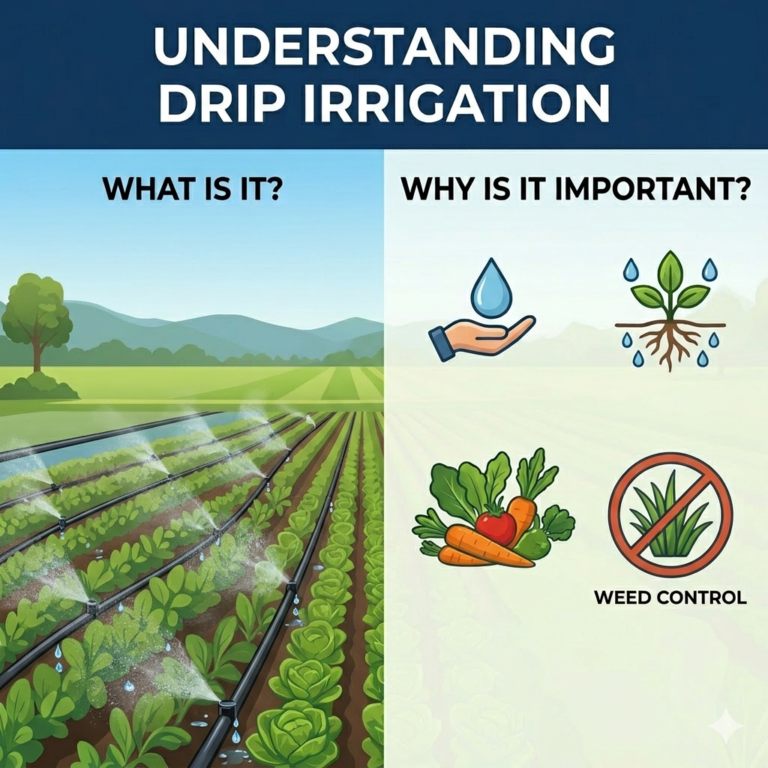
Drip irrigation is an advanced method that supplies water directly to the base of plants through a network of pipes, tubes, and small orifices called emitters. Instead of saturating the entire field, this system releases moisture slowly and accurately near the root structure. This allows the soil to absorb liquid gradually, ensuring crops receive necessary hydration without unnecessary waste.
The basic concept centers on efficient subsurface watering. Water travels through lateral lines and is discharged in small droplets directly into the ground surrounding each plant. Because the flow goes straight to the roots, vegetation can utilize it more effectively, and less volume is lost to the air or surface runoff. This pinpoint approach makes it a practical solution for enhancing resource management and supporting eco-friendly farming practices.
Why Drip Irrigation Is Important?
This technology plays a vital role in modern cultivation because it empowers farmers to use resources in conventional methods that often waste a significant percentage through evaporation. Drip systems address this by supplying moisture slowly and directly to the soil, allowing crops to thrive. According to the Food and Agriculture Organization, optimizing these systems is essential for long-term conservation.
Controlled delivery also helps growers manage their fields more effectively and maintain healthy growth. Because hydration is facilitated through regulated piping and emitters, plants receive the right amount of moisture without the risk of field flooding. This disciplined approach boosts farm productivity while protecting valuable natural assets.a smarter, more calculated way. In many agricultural regions, water supplies are limited, and co
Key reasons why drip irrigation is important include:
- Conservation: Saves water by delivering it straight to the source.
- Growth: Promotes healthier crops with steady moisture levels.
- Waste Reduction: Minimizes losses from surface runoff and heat.
- Fertigation: Allows for the precise application of liquid fertilizers.
- Resilience: Supports farming in arid or water-stressed regions.
How Drip Irrigation Works.
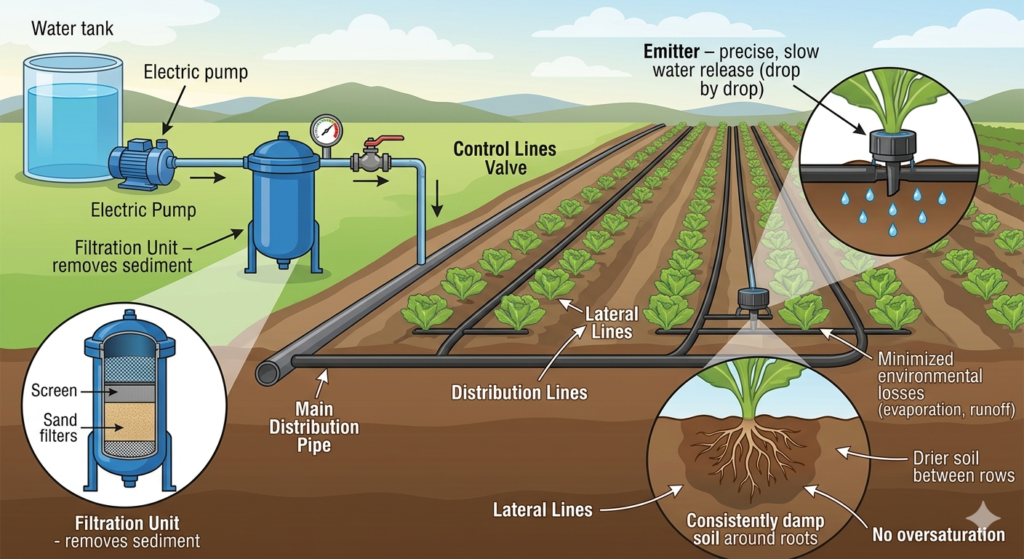
The process involves moving water slowly through a network of tubes and pipes to small exit points. The flow starts at a main supply, passes through a filtration unit, and then travels along the distribution lines. The emitters release the liquid drop by drop, keeping the soil consistently damp without oversaturating the field. This careful method helps crops stay healthy while drastically reducing environmental losses
Components of a Drip Irrigation System.
A fully functional system consists of several key parts. Each part has a specific role in ensuring the flow moves smoothly and reaches the destination in a regulated manner.
- Water Source and Pump: The system begins with a reliable supply such as a well or reservoir. A pump provides the necessary pressure to push the water through the entire network.
- Filtration System: Filters remove debris, sand, and organic matter to prevent the tiny emitters from clogging.
- Distribution Tubing: A series of pipes and flexible hoses that carry the supply from the main line to different sections of the plot.
- Drip Emitters: Small devices attached to the tubing that discharge water slowly and evenly.
- Root Zone Delivery: The final stage where moisture enters the soil, allowing for maximum absorption and minimal waste.
Role of Drip Irrigation in Sustainable Agriculture.
This method promotes ecological farming by helping farmers/growers utilize resources more effectively. As the industry faces challenges from climate shifts, methods that reduce waste are becoming essential. By targeting the plant’s base, drip systems support yields while minimizing consumption.
Key roles in sustainability include:
- Climate-Smart Agriculture: Supports practices that improve output while reducing the environmental footprint.
- Resource Management: Uses water carefully, helping to protect limited local supplies.
- Climate Adaptation: Assists farmers in coping with irregular rainfall and drought by providing a dependable water supply.
- Input Efficiency: By delivering nutrients and water together, it helps optimize the use of fertilizers and energy.
Future of Water-Efficient Irrigation
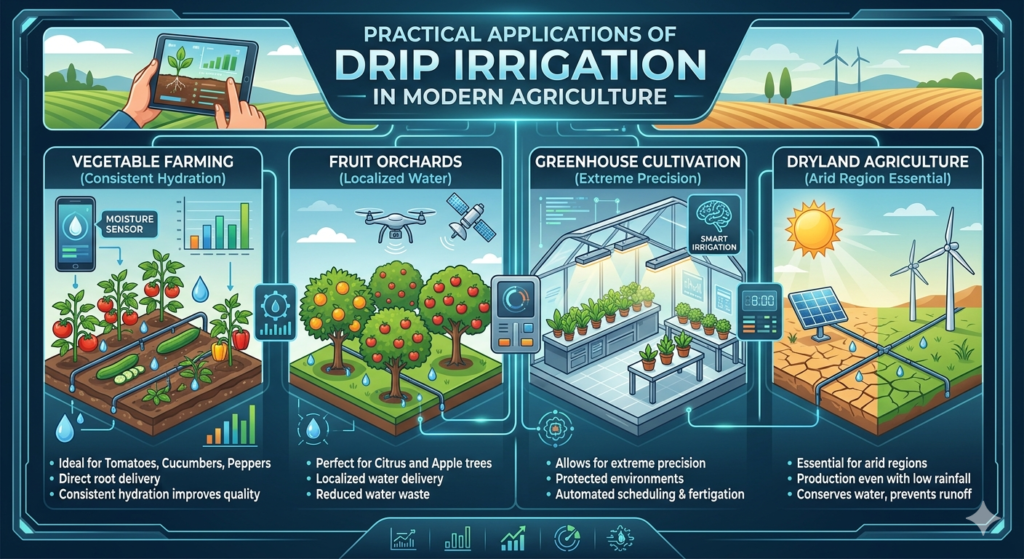
The future of drip irrigation is tied to new tools that help farmers grow more food with less water. This is especially vital in mountain areas like Gilgit-Baltistan, where water comes from melting glaciers and seasonal rain. In these regions, farmers benefit from systems that automatically adjust to the weather and environment.
Key technologies shaping the future of farming include:
- Precision Tools: Using ground sensors and satellite data to water plants only when the soil is actually dry.
- Smart Systems: Digital apps that change watering schedules based on daily weather and plant growth.
- Solar-Powered Pumps: Using solar panels to move water from wells or rivers. This provides a free, clean energy source that works perfectly in sunny, remote locations. Organizations like the Aga Khan Rural Support Programme (AKRSP) have already successfully installed these solar-powered systems across different regions of GB, helping farmers save money and stay productive.
Horticulture experts say that combining these high-tech tools with drip irrigation protects our natural resources. In places like northern Pakistan, these methods help farming stay successful and sustainable even as the climate changes.
Conclusion
Drip irrigation is a dependable technique that helps the agricultural sector manage water more efficiently. By supplying moisture directly to the root zone, the system cuts down on waste and improves overall farm performance. As global pressure on water resources increases, adopting these practices will be vital for the future of food security. Emerging technologies like automated sensors are expected to further refine these systems, making them an indispensable solution for regions like Gilgit-Baltistan.
About the Author
Muhammad Irshad is a Certified Horticulturist with the National Agricultural Research Centre. Holding a BS (Hons) in Horticulture from Karakoram International University, his work focuses on sustainable practices and climate-smart solutions. He is dedicated to helping farmers improve productivity while adapting to environmental changes, particularly in mountain regions